

A Crane Remaining Life Assessment (RLA) provides a systematic way to determine the current structural condition of a crane and evaluate how long it can continue operating safely under its intended working conditions.
Cranes operate under repeated lifting, lowering, travelling, and load-handling cycles, often in demanding industrial environments. Over time, these operating conditions can lead to metal fatigue, structural deterioration, deformation, cracks, and other forms of damage that may not always be visible during routine inspections.
For industrial facilities in Oman, where overhead, EOT, gantry, and other lifting equipment can be critical to production and material handling, an RLA can support informed decisions about continued operation, repair, refurbishment, modification, or replacement.
What Is Crane Remaining Life Assessment?
Crane Remaining Life Assessment is an engineering evaluation used to determine the remaining safe operating life of a crane based on its structural condition, operating history, loading conditions, fatigue exposure, and inspection results.
The assessment generally combines information from:
- Physical inspection of crane structures and components
- Crane operating and maintenance history
- Load and duty-cycle information
- Structural calculations
- Fatigue assessment
- Stress and deformation analysis
- Finite Element Analysis (FEA)
- Identification of critical structural areas
- Previous repairs, modifications, or alterations
Rather than relying only on the crane’s age, RLA considers the actual condition and operating history of the equipment.
Why Is Crane Remaining Life Assessment Important?
A crane can remain in service for many years, but age alone does not indicate whether its structure has adequate remaining life. Repeated loading cycles can gradually accumulate fatigue damage, particularly around highly stressed or geometrically complex areas.
An RLA can help identify:
- Structural weaknesses
- Excessive stress concentrations
- Fatigue-prone locations
- Permanent deformation
- Cracks or other damage
- Deterioration of structural members
- Effects of previous modifications
- Components approaching their fatigue limits
The findings can then be used to establish an engineering-based maintenance or life-extension strategy.
How Does FEA Support Crane Life Assessment?
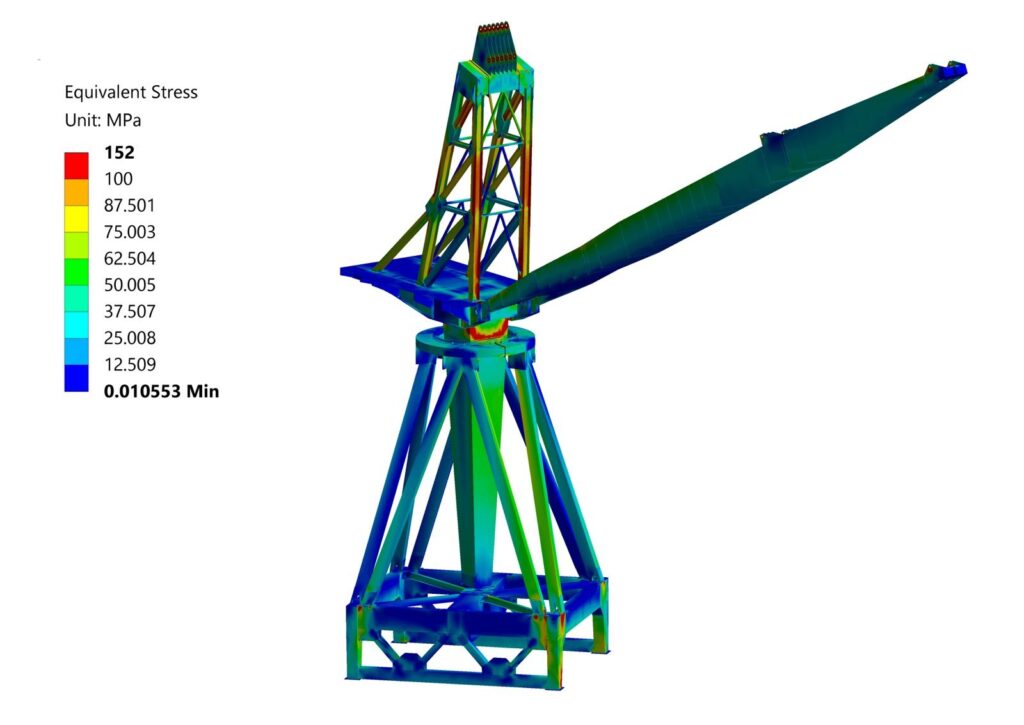
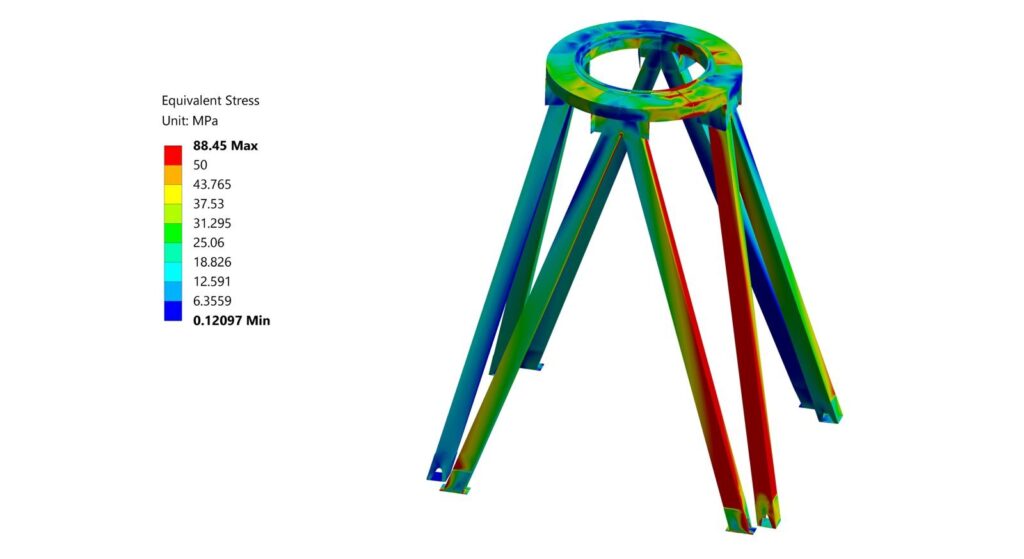
Finite Element Analysis (FEA) is an important engineering technique that can be used to understand how a crane structure responds to different loading conditions.
A digital model of the crane or its critical structural components can be developed and evaluated under representative operating loads.
FEA can help determine:
1. Stress Distribution
FEA shows how stresses are distributed throughout structural members such as:
- Girders
- End carriages
- Brackets
- Connections
- Support structures
- Welded regions
- Trolley and hoist supporting areas
Areas experiencing comparatively high stress can be investigated further during the assessment.
2. Structural Deformation
Excessive deflection or deformation can affect crane operation and may indicate inadequate structural stiffness or deterioration.
FEA allows engineers to evaluate deformation under different load cases and compare the results against applicable design or acceptance criteria.
3. Stress Concentrations
Connections, welded joints, changes in cross-section, openings, and attachment points can create localized stress concentrations.
Identifying these areas is particularly important for fatigue evaluation because repeated stress cycles can contribute to crack initiation and propagation.
4. Different Loading Conditions
A crane may experience several combinations of loads during operation. Depending on the crane configuration, the assessment may consider factors such as:
- Rated lifting load
- Self-weight
- Trolley and hoist loads
- Dynamic effects
- Horizontal forces
- Braking and acceleration forces
- Wind loads
- Load positioning
- Other applicable operational loads
FEA can be used to assess structural response under relevant load combinations.
Crane Fatigue Assessment
Fatigue is one of the important considerations when determining the remaining life of a crane.
Unlike a single overload event, fatigue damage can develop gradually through repeated loading cycles. A structure that appears acceptable during a visual inspection may still require further engineering evaluation if it has accumulated a significant number of operating cycles.
A fatigue assessment can consider:
- Number of load cycles
- Load spectrum
- Stress range
- Stress concentration
- Structural details
- Welded connections
- Existing damage
- Crane classification and duty
- Historical operating conditions
The objective is to estimate whether critical structural areas have sufficient fatigue life for continued operation.
What Does a Crane RLA Typically Involve?
A comprehensive assessment can involve several stages.
Step 1: Collect Crane Information
Relevant technical and operational information is gathered, including:
- Crane type and configuration
- Rated capacity
- Span and lifting height
- Manufacturer information
- Original design documentation
- Operating history
- Maintenance records
- Inspection reports
- Repair records
- Modification history
- Duty classification
- Typical load cycles
This information helps establish the background for the engineering assessment.
Step 2: Conduct a Detailed Inspection
The physical condition of the crane is examined to identify visible deterioration and areas requiring further investigation.
Depending on the crane and assessment requirements, inspection may focus on:
- Main girders
- End carriages
- Welded joints
- Connections
- Brackets
- Trolley structures
- Hoist supporting structures
- Corrosion
- Cracks
- Deformation
- Previous repair areas
Non-destructive examination may also be considered where further investigation of suspected defects is required.
Step 3: Identify Critical Structural Areas
Inspection findings and engineering calculations are used to identify components that may have a significant influence on structural integrity and remaining life.
These areas can then be prioritized for detailed analysis.
Step 4: Perform Structural and FEA Analysis
FEA can be used to evaluate stresses, deformation, and structural response under relevant loading scenarios.
The results provide additional engineering information beyond what can be obtained through visual inspection alone.
Step 5: Evaluate Fatigue Life
The estimated operating cycles and stress conditions can be assessed to understand fatigue exposure and the potential remaining fatigue life of critical components.
Step 6: Develop Engineering Recommendations
The final assessment can provide recommendations based on the observed condition and analysis results.
Depending on the findings, recommendations may include:
- Continued operation with monitoring
- Increased inspection frequency
- Localized repair
- Structural reinforcement
- Component replacement
- Crane modification or refurbishment
- Load restrictions
- Further detailed investigation
- Replacement of the crane where continued operation is not technically justified
Which Cranes Can Require Remaining Life Assessment?
RLA can be relevant to various industrial lifting systems, including:
- EOT cranes
- Overhead cranes
- Gantry cranes
- Workshop cranes
- Process cranes
- Heavy-duty industrial cranes
- Other load-bearing crane structures
The appropriate assessment methodology depends on the crane design, application, operating conditions, history, and applicable requirements.
When Should a Crane Undergo an RLA?
A Remaining Life Assessment can be considered when a crane:
- Has been operating for many years
- Has accumulated a high number of lifting cycles
- Has experienced heavy or demanding service
- Has undergone structural modifications
- Has a history of repairs
- Shows cracks, deformation, or corrosion
- Experiences unusual structural behaviour
- Is approaching or exceeding its original design life
- Is being considered for continued operation or life extension
It can also be useful when an owner needs engineering information before deciding whether to repair, upgrade, refurbish, or replace an existing crane.
Standards and Engineering Criteria
Crane life assessment should be carried out using engineering criteria and standards applicable to the specific crane type, design, and operating environment.
Depending on the equipment and assessment scope, relevant references may include standards and guidelines such as ISO 12482, FEM recommendations, CMAA requirements, and other applicable international or local engineering requirements.
The specific standards used should be determined based on the crane configuration and assessment requirements rather than applying one standard universally.
Benefits of Crane Remaining Life Assessment
A structured RLA can provide crane owners and industrial operators with useful information for asset management and maintenance planning.
Key benefits include:
Improved Understanding of Structural Condition
The assessment combines inspection and engineering analysis to provide a more detailed understanding of the crane’s condition.
Better Maintenance Planning
Identifying critical areas can help maintenance teams prioritize inspection, repair, and monitoring activities.
Support for Life Extension
Where the structural condition permits, engineering findings can support decisions regarding continued operation or refurbishment.
Identification of Fatigue-Critical Areas
Fatigue analysis can highlight areas that require closer monitoring or corrective action.
Informed Replacement Decisions
An engineering assessment can provide technical information when comparing continued operation against major refurbishment or replacement.
Reduced Unplanned Downtime
Identifying developing structural issues before they become serious can support proactive maintenance planning.
Crane Remaining Life Assessment Services in Oman
For industrial operators in Oman, assessing the condition of ageing lifting equipment is an important part of maintaining safe and reliable operations.
Ocean Technical & Mechanical Services LLC (Ocean TMS) provides engineering and condition-monitoring solutions for industrial assets in Oman. A crane Remaining Life Assessment can combine inspection findings, operational information, structural engineering, fatigue considerations, and FEA analysis to develop a clearer understanding of crane condition and remaining service potential.
The assessment can help asset owners make technically informed decisions about repair, reinforcement, refurbishment, continued operation, or replacement.
Conclusion
The age of a crane does not by itself determine whether the equipment has reached the end of its useful life. Its actual condition, operating history, loading cycles, fatigue exposure, and structural integrity all play important roles.
A Crane Remaining Life Assessment supported by FEA and structural analysis provides a systematic approach to evaluating these factors. By identifying critical stress areas, deformation, fatigue concerns, and structural deterioration, crane owners can develop more informed maintenance and asset-management strategies.
For businesses operating cranes in Oman, proactive assessment can provide valuable engineering information before structural problems develop into major operational or safety concerns.
Looking for a Crane Remaining Life Assessment in Oman? Contact Ocean TMS to discuss your crane inspection and structural assessment requirements.