
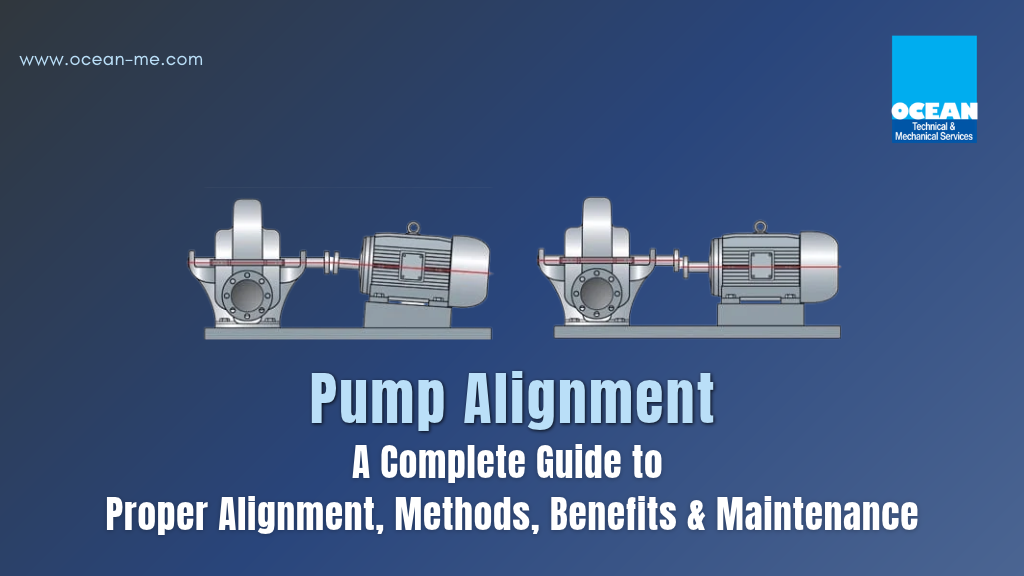
Pump alignment is a precision maintenance process used to accurately position the pump and motor shafts along a common centerline. It involves measuring and correcting angular and parallel (offset) misalignment between connected rotating components to ensure efficient power transmission and smooth equipment operation.
Proper pump shaft alignment helps minimize vibration, coupling stress, bearing loads, seal failures, and premature wear, improving equipment reliability and extending the service life of pumps and associated components.
Pumps are an essential part of everyday life as well as modern industrial operations. From oil refineries and water treatment facilities to power plants, manufacturing units, and process industries, pumps are responsible for moving fluids through critical systems and supporting continuous production.
However, even a high-quality pump cannot deliver reliable performance if it is not correctly aligned with its driver. Proper alignment allows the connected equipment to operate efficiently while reducing unnecessary mechanical stress.
Pump alignment simply could indicate fixing a certain misalignment but in terms of machine health monitoring and preventive maintenance strategies, it is the precise positioning of the pump and its driver so the shafts and connected parts work on a common centreline.
Shaft alignment is essential to make sure the rotating shafts keep a proper angular and parallel relationship because proper pump-motor alignment is imperative to avoid unwanted forces from being passed through the coupling and the bearings.
Shaft misalignment is one of the common contributors to rotating equipment problems and can lead to excessive vibration, coupling damage, premature bearing and seal wear, and increased energy consumption. If alignment problems are left uncorrected, the resulting mechanical forces can progressively affect other components, including pump mounts, shafts, and motor or pump casings, potentially leading to costly repairs and unplanned shutdowns.
Proper alignment is needed for rotating equipment to work reliably because even the slightest deviation can attribute to vibration, coupling stress, bearing loads, seal wear and excessive energy consumption. When considered from the perspective of condition monitoring and asset health monitoring pump alignment gives an important indication of the mechanical status of equipment helping identify escalating anomalies before they cause damage or unplanned downtime.
Regular alignment checks, integrated with vibration analysis and other predictive maintenance techniques, facilitate preventive maintenance programs by streamlining equipment reliability, extending component life and maintaining efficient operation across industrial facilities.
In this blog, we explore why accurate pump alignment matters, the common problems associated with misalignment, and the warning signs that can indicate an alignment issue. We will also cover practical alignment methods and maintenance practices that can help improve equipment reliability, extend component life, and reduce unexpected downtime.
What Is Pump Alignment?
In centrifugal pumping systems, especially long-coupled ones, the pump and driver are separate whose shafts are connected through a coupling. For efficient operation, the shaft centerlines have to have the specified geometric connection under operating conditions.
When the centerlines meet at an unintended angle, the condition is known as angular misalignment. In contrast, parallel or offset misalignment occurs when the shafts remain parallel but their centerlines are displaced from one another, either horizontally or vertically. In practical installations, both angular and offset misalignment can occur simultaneously.
Although flexible couplings are designed to accommodate a certain level of shaft movement and installation tolerance, they are not expected to compensate for major alignment variations. Excessive misalignment generates additional radial and axial forces within the coupling and connected equipment. These forces can increase vibration, bearing loads, coupling wear, and mechanical seal stress, while also contributing to higher operating temperatures and premature component failure. If the condition continues without correction, it can affect equipment reliability, process continuity, and plant safety.
Pump alignment is accurately positioning the pump and its driver so that their shaft centerlines meet the specified alignment tolerances. The process may include adjusting the motor or pump, altering machine feet, correcting soft foot, and the use of shims or precision alignment systems. The objective is not simply to make the shafts appear visually aligned, but to establish the required alignment condition that remains acceptable during operation and accounts for factors such as thermal growth.
Normally associated with pump-and-motor assemblies, shaft alignment principles apply broadly to rotating equipment. Turbines, compressors, gearboxes, generators, fans, and other coupled machinery can also require precision alignment to control mechanical loads and maintain reliable operation. As a result, accurate alignment is an important part of rotating equipment maintenance and condition-based reliability programs.
Why Is Proper Pump Alignment Important?
If a pump is to operate properly and reliably, proper shaft alignment is pivotal. So, to ensure the smooth power transmission from the motor to the pump through the coupling. Even the slightest misalignment can cascade and cause stress on rotating components, which can affect equipment performance and its service life. Generally, pump misalignment falls into three categories:
- Radial Misalignment: also known as offset or parallel misalignment, occurs when the motor and shafts stay parallel but are offset sideways and the centreline does not align.
- Angular Misalignment: this misalignment occurs when the shafts are at an angle and not parallel. This prevents coupling from proper power transmission.
- Axial Misalignment: In this misalignment, the shafts are aligned but one of the shafts moves back and forth along its axis; this causes unwanted axial movement.
- Angular+Offset: Happens when the shafts are both offset and intersect at an angle; combined misalignment is the most common type of misalignment.
Common types of Pump Misalignment
Shaft alignment is a common issue that affects rotating equipment; a small change in the alignment of the driving and driven shafts could cause significant damage. Minimised equipment reliability, increase maintenance costs, damage bearings, seals and couplings and more. The three common types of shaft misalignment are Angular, parallel, and both misalignment happening at once; this occurs when a combination of both angular and parallel misalignments happens. Let us look at the details:
Angular Misalignment
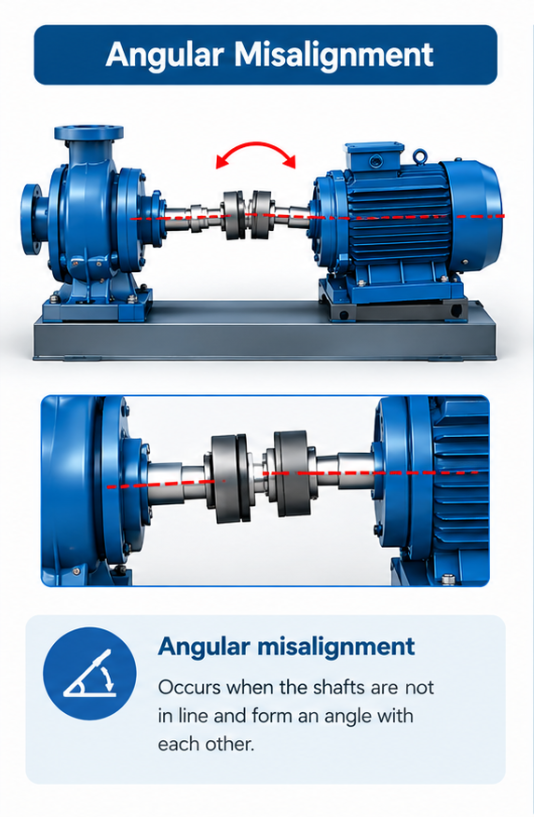
Angular Misalignment is when the centrelines of the driver and driven shafts meet at an angle in place of being parallel; so are the coupling faces. The gaps between coupling faces are different around the circumference and could be in horizontal or vertical planes. The underlying reason for this particular type of misalignment can be improper installation, soft foot, pipe strain, thermal strain, among others. It takes a toll on the equipment parts too. Some of the associated issues, like coupling wear and fatigue, intense vibration, and increased bearing loads, cause cyclic stress on the pumps.
Parallel Misalignment
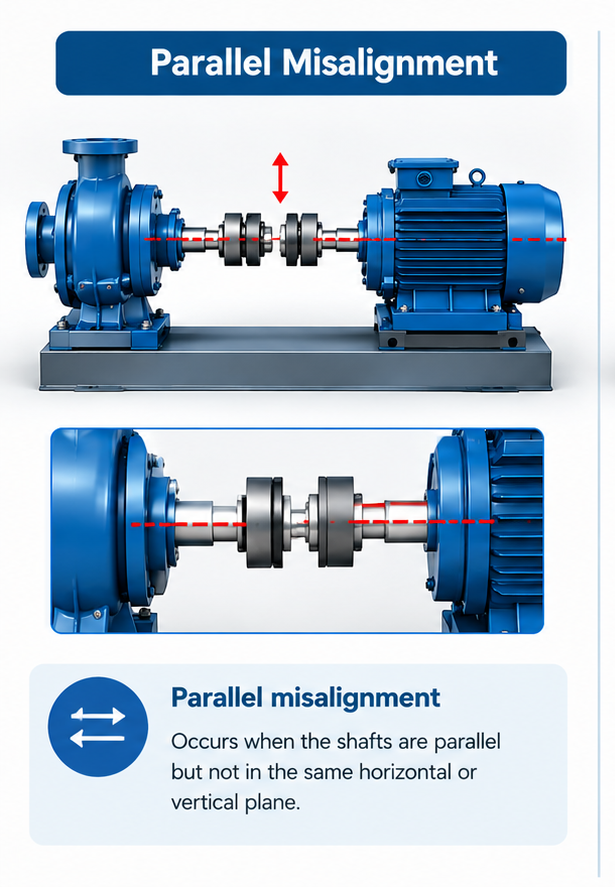
Parallel or offset misalignment usually happens when the centerlines of two coupled shafts are displaced from one another being parallel. In this type of misalignment, the shafts do not intersect, and one shaft is laterally offset from the other.
One major sign of parallel misalignment is shaft centerlines remaining parallel across their length, since they are offset. This type of misalignment occurs when there is incorrect machine positioning or installation, foundational issues, thermal expansion, and excessive vibration, which cause the machine to move from its correct alignment.
Combined Misalignment
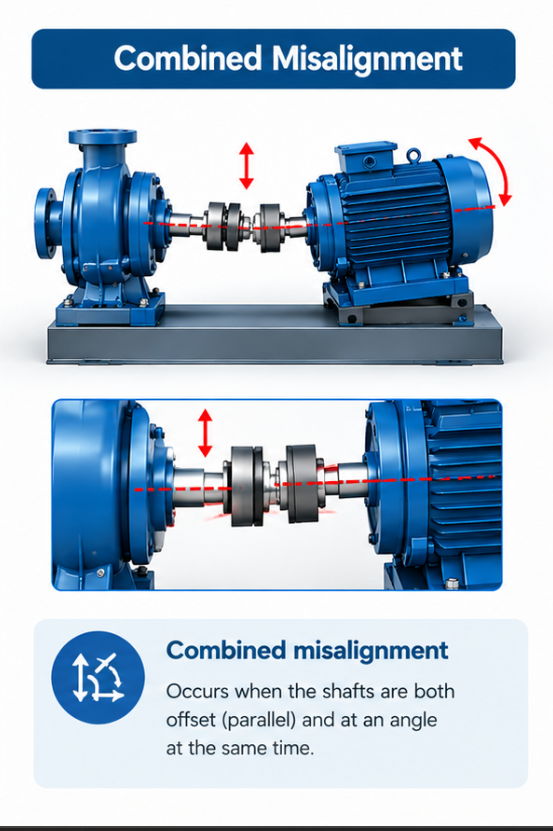
Angular alone or purely offset misalignment would rarely occur in practical scenarios; in reality, machines exhibit both of these misalignment conditions. Combined misalignment is both angular and offset misalignment that may occur simultaneously. Precision laser shaft alignment systems measure angular and offset errors. There are various other condition monitoring techniques that identify shaft alignment issues, like vibrational analysis, thermal imaging and MCSA, etc.
What if pump misalignment is overlooked?
Failing to address the pump alignment promptly can lead to several issues, mainly operational disruptions, equipment damage, wear and other anomalies that can affect operations.
- Premature Parts Wear: Bearings, seals, and shafts work under increased stress and wear out faster if the misalignment is left unaddressed.
- Leakage: Misalignment can contribute to sealing and component failure that may lead to fluid leaks, causing sudden unplanned maintenance and compromising the environment, posing safety risks.
- Intense vibration and noise: Intense vibration and excessive noise show early misalignment; it affects pump performance and shorten the equipment life.
- Reduced efficiency: A misaligned pump does the same amount of work but with more energy consumption; this extra power usage affects the efficiency of the system.
- Increased operating costs: Recurrent maintenance, repairs, unplanned downtime, higher energy costs, and sudden equipment damage and replacements affect the overall productivity of the equipment.
Alignment of Shafts: Step-by-Step Guidance
Proper shaft alignment is important for keeping a pump running smoothly and reliably. It ensures that the motor and pump shafts stay on the same centreline while operating. Even a small amount of angular or parallel misalignment can cause vibration, faster wear, energy loss, and damage to components.
A typical pump shaft alignment process involves the following steps:
1. Inspect the equipment
Start by checking the pump and motor for visible damage, loose parts, worn components, or installation problems. Check that the foundation is firm, mounting bolts are tight, and the coupling is in good condition before starting the alignment.
2. Carry out a rough alignment
Before taking accurate measurements, perform a basic alignment check to find any major misalignment. This initial adjustment brings the motor and pump closer to the correct position and makes the final alignment easier.
3. Measure the shaft alignment
Use a suitable alignment tool, such as a laser shaft alignment system, to measure angular and parallel misalignment. Laser tools provide accurate readings and help identify the adjustments needed to align the shafts correctly.
4. Correct the misalignment
Use the measurement results to move the motor or driver into the correct position. This can include fixing soft foot, moving the motor sideways, or adding or removing shims under the machine feet. Thermal growth and normal operating conditions should also be considered when making these adjustments.
5. Check the final alignment
After making the corrections, take another set of measurements to confirm that the shafts are within the recommended alignment limits. If required, make further adjustments until the readings are accurate and consistent.
Correct pump shaft alignment helps reduce vibration, energy losses, and unnecessary wear. It also lowers maintenance costs and helps extend the working life of the pump, motor, and other connected components.
.
Pump Alignment Procedure
Pump alignment involves positioning the pump and motor so their shaft centrelines are correctly aligned. This helps transfer power smoothly and keeps the equipment running efficiently. Alignment can be checked and adjusted using laser alignment tools, dial indicators, feeler gauges, and other suitable measuring devices.
The alignment should also be checked again after the equipment reaches its normal operating condition. Thermal expansion, machine movement, and operating loads can slightly change the shaft position. Regular vibration checks and alignment inspections can help identify developing misalignment early. Proper alignment reduces vibration and component wear, avoids unnecessary energy loss, improves equipment reliability, and helps extend the service life of rotating machinery.
Common Causes of Misalignment in Pumps
Pump misalignment can arise due to many factors. The following are some of the common causes.
- Installation failure: Adhering to the manufacturer’s installation instructions is vital; failing to do so can lead to misalignment during the installation stage.
- Bearing Wear and Damage: Damaged bearings can cause shafts to deflect; this could contribute to misalignment.
- Soft Foot Condition: If the motor feet are uneven, it can lead to distortion and wobbling of the machine, resulting in soft foot conditions.
- Improper Pipe Alignment: Pipe stress is another factor that can lead to pump misalignment, as it may displace the pump and disrupt the alignment.
- External Shocks and Vibration: External shocks and excessive vibration can gradually alter the alignment over time.
- Thermal Expansion: Thermal expansion due to temperature fluctuations can also cause the components to shift, leading to misalignment.
How Do You Fix Misalignment in a Pump?
After measuring the misalignment, the technicians adjust the pump or motor till the desired alignment is achieved and the shafts are properly aligned.
- Loosen the mounting bolts so the motor can move.
- Move the motor horizontally, vertically, or add/remove shims to achieve the correct alignment.
- Tighten the mounting bolts and recheck the alignment again.
- Use proper tools for minor alignment corrections if needed.
- Confirm that the shafts are within the intended alignment limits and double-check if all bolts and components are securely tightened.
What specific techniques can be used to measure and correct pump alignment?
Proper pump alignment is important for keeping the equipment reliable and efficient. Shaft misalignment is often linked to a large share of problems in pumps and other rotating equipment, making accurate alignment an important part of installation and commissioning.
During commissioning, the pump and motor should be checked again and realigned if needed. Correct alignment helps prevent excessive vibration, reduces stress on bearings and seals, avoids unnecessary power use, and allows the pump and motor to run smoothly.
Making alignment a regular part of installation and maintenance helps technicians keep equipment in good condition. It can also reduce repair and maintenance costs, improve reliability, and support longer pump service life.
Benefits of Pump Alignment
Proper pump alignment is an important part of maintaining rotating equipment. When the pump and motor shafts are correctly aligned, the equipment can run smoothly with less stress on its components. This improves overall performance and helps extend the life of the machine.
Some key benefits of proper pump alignment include:
- Better efficiency: Correct alignment helps reduce energy loss and unnecessary power use, which can lower operating costs.
- Longer equipment life: Proper alignment reduces wear and stress on bearings, couplings, seals, and other components.
- Less mechanical stress: It reduces the chances of component damage, unexpected breakdowns, and unplanned shutdowns.
- Lower vibration and noise: Well-aligned shafts run more smoothly, helping reduce excessive vibration and operating noise.
Pump Alignment Checklist
Before starting pump alignment, a few basic checks should be completed to ensure safe and accurate results:
- Follow Lockout/Tagout (LOTO) procedures and make sure the equipment is safely isolated.
- Inspect the pump, motor, and connected parts for wear, damage, or other installation problems.
- Make sure the alignment tools are calibrated and working correctly.
- Check the foundation and baseplate to ensure they are stable and properly supported.
- Inspect the mounting bolts and coupling for any damage or looseness.
- Clean away dirt, debris, or anything else that could affect the alignment.
- Record the alignment readings and any adjustments made for future reference.
Following these steps before alignment helps improve equipment performance, reduce unexpected downtime, and extend the service life of the pump.
Pump Alignment Tools
Pump alignment tools vary from the compact set of hand tools to advanced precision tools. Some of the tools available in the market are:
- Laser Shaft Alignment Tools– for fast, precise, and reliable shaft alignment results in complex alignments. Often involve manual calculation and measurement.
- Reverse Dial Indicator– to measure angular and parallel shaft misalignment with increased precision.
- Straightedge and feeler Gauge- this tool is particularly beneficial for basic and initial rough alignment checks.
- Precision Shims– are used to adjust the height in pumps or motors for vertical alignment.
- Calliper or Steel Rule– used to measure distances and check component positioning.
In pump alignment, laser shaft alignment tools are specially designed for their precision and convenience. Laser alignment tools use a laser beam and a range of detectors to check the alignment of the pump. The laser shaft alignment technology gives quick feedback and alignment calculations. Main advantages of laser technology are:
- Quick setup and instant feedback
- High precision and convenience
- Less human error
- Can store and track alignment data for future maintenance.
Precision Pump Alignment in Oman with Ocean TMS
Ocean TMS is a leading provider of pump laser shaft alignment services across the Oman. We help industries achieve equipment reliability, reduce downtime, and improve operational efficiency with advanced technology. With over two decades of hands-on industry experience, we bring precision and efficient alignment solutions employing the most advanced laser alignment technology because we know that ensuring optimal machine performance and extended equipment life is crucial to hassle-free operations.
As an ISO-certified company, Ocean TMS is fully committed to delivering services that meet the global standards of quality, safety, and reliability. Our partnership with renowned technology leaders such as Fluke Reliability has allowed us to provide our clients with the industry’s best condition monitoring solutions, which are also backed by the latest diagnostic tools and our expert engineers.
Precision laser shaft alignment systems fromOcean TMS gives accurate measurements, allowing us to fix even complex shaft misalignment quickly and efficiently. Proper alignment is critical in reducing vibration, minimising bearing and seal failures, lowering energy consumption, and significantly extending the operational life of pumps, motors, compressors, fans, and other rotating equipment.
We offer advanced Laser Shaft Alignment for pumps, motors, compressors, fans, blowers, and rotating machinery, Machinery Vibration Analysis and Diagnostics, Machine Health Assessment and Reliability Consulting, Precision Maintenance Solutions and more.
At Ocean TMS, we bring together skilled engineers, modern technology, and years of practical experience to provide precise shaft alignment and condition monitoring services. By helping businesses improve equipment performance, reduce downtime, and maintain reliable operations, we support safer and more efficient industrial processes.
Ensure optimal pump and motor performance with our precision shaft alignment service. To learn more, contact us now!